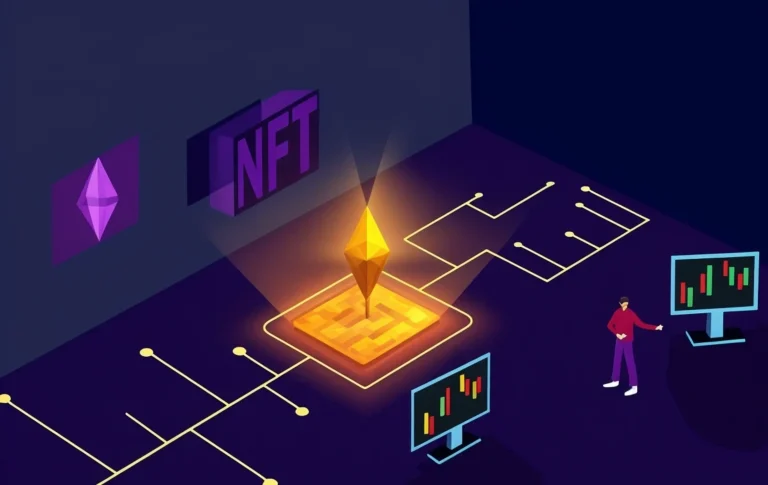
The integration of AI and Crypto is reshaping the landscape of economic engagement. As AI agents evolve into economic players, powered by crypto technologies, it’s crucial to understand the implications of this shift and how it impacts our digital economy today.
The Rise of AI Agents in Economic Roles
AI agents are increasingly recognized as independent economic entities, showcasing an evolution that shifts them from simple digital assistants to dynamic players in the economy. These digital entities are not just programmed to respond to queries anymore; they are capable of executing transactions and making financial decisions. For instance, companies like OpenAI are deploying AI models that can autonomously engage in financial strategies, representing a significant leap in their abilities.
In practical terms, AI agents are taking on roles that traditionally required human intervention. They autonomously buy and sell assets, manage portfolios, and even operate customer service in e-commerce settings. This transformation exemplifies the ongoing trend where AI agents are not merely tools but are turning into economic decision-makers. Real-world examples, such as the rapidly increasing Agent GDP that reportedly exceeded $479 million, underscore their growing importance in the economic landscape. As noted by industry insights, AI agents are becoming an economy in themselves, driving a change in how business is conducted across industries.
Crypto Technology as a Catalyst for Economic Independence
Crypto technology serves as a crucial catalyst for empowering AI agents, enhancing their autonomy in economic activities. Key innovations like decentralized finance (DeFi) protocols enable AI agents to interact with financial systems without relying on traditional banking infrastructures. This independence is pivotal, as it allows AI agents to conduct transactions more efficiently and securely.
Particularly, decentralized protocols facilitate quicker transactions by removing intermediaries, thereby streamlining operations. For instance, the x402 payment protocol exemplifies how AI agents can utilize crypto technologies to process payments directly within digital frameworks, completing transactions without human oversight. With over 100 million transactions processed annually, x402 demonstrates the efficiency and scalability potential of integrating AI with crypto frameworks. This shift not only supports autonomous economic activities but also paves the way for innovative business models and markets.
Current State of AI and Crypto Integration
The current market dynamics surrounding AI and crypto illustrate a significant trend towards integration. As these technologies converge, we observe emerging trends that shape the digital economy. For example, the increasing utilization of blockchain technology in AI is providing transparency and ethical considerations, which are essential in building trust within market systems.
Emerging trends also indicate that AI capabilities are becoming vital for crypto platforms aiming to enhance user experiences and operational efficiencies. Industry innovations, including the recent developments in the x402 payment protocol, show how AI agents can execute trades with minimal delay, reflecting a growing trend in real-time economic activities. According to reports, the integration of AI into crypto platforms is expected to redefine various sectors, including finance, logistics, and healthcare.
Economic Implications of AI and Crypto Collaboration
The collaboration between AI and crypto significantly impacts various industries, marking a shift in traditional business models. AI agents, taking on economic roles, can disrupt established practices, leading to more streamlined and automated processes. Industries are beginning to adapt to new paradigms where AI-enhanced efficiencies replace manual error-prone tasks.
Beyond operational efficiencies, this collaboration raises critical questions about the future of employment in sectors like finance, where AI agents can analyze market trends faster than human analysts. Additionally, as these AI agents operate within decentralized ecosystems, they influence digital marketplaces, potentially reshaping pricing and supply chain logistics. Traditional businesses must adapt to the rise of these economic players or risk being outpaced by their more agile counterparts. The transition into these new dynamics necessitates a proactive approach from businesses to stay competitive.

Innovations Driving AI Agent Economies
Recent technological advancements are fostering synergies between AI and crypto, driving the evolution of AI agent economies. Key players within the industry, such as MetaMask and Coinbase, are working towards creating robust infrastructures that allow AI agents to thrive economically. These technologies are laying the groundwork for a new intersection of innovation where AI empowers consumers and businesses alike.
Case studies highlight successful applications of AI and crypto in sectors ranging from fintech to supply chain management. For instance, platforms harnessing AI to analyze consumer behavior coupled with the transactional abilities of crypto technology can create more personalized shopping experiences. The cross-pollination between these technologies hints at a future where economic activities are increasingly conducted by autonomous agents, further enriching digital economies.
Steps Towards Engaging with AI Agents and Crypto
For businesses looking to leverage the capabilities of AI and crypto, several actionable steps can facilitate effective integration. First, conducting thorough research on how these technologies can align with specific business objectives is crucial. This understanding can lead to tailored strategies that capitalize on both AI capabilities and crypto efficiencies.
Subsequently, businesses should focus on training their workforce to adapt to these technologies, emphasizing continuous learning to handle new operational frameworks. Utilizing resources like industry reports and workshops can further bolster knowledge in these areas. Finally, embracing a forward-thinking mindset that anticipates the evolution of AI and crypto in the market can provide a competitive advantage. As the landscape evolves, resources and partnerships should be explored to enhance adaptability and innovation, ensuring that companies remain relevant in a rapidly changing environment.
About The Author